A Trip to Vietnam 1993 |
||
| Backpacking Index VSO Index Main Index | ||
Vietnam was a part the adolescent wallpaper for all western young people in the 1960s and 70s. This was the first year that the Government had removed the restrictions on internal travel between Provinces, so tourism, although established, was not mainstream. It was a good time to visit. En Route to Ho Chi Minh City/Saigon It was a choice of direct transport and high costs or Aeroflot, the Russian State airline with a 7 hour wait in Moscow airport. Vietnam, a taste of Russia after the fall of the Soviet Union, and wallet enhancement swung it towards Aeroflot. I was not to be disappointed. It didn't start well. I was working until close to midnight the day before catching the bus to Heathrow. Next morning I rose early and did a quick last check. Passport - check, money - check, air tickets - negative, sirens blare. I drove fast to Cullompton and woke a disgruntled school caretaker at 6.45 to retrieve the tickets from the photocopier in the school. I just caught the coach feeling sick from tiredness and exhaustion from running with a backpack. Heathrow was chaotic and I missed my chance for a temporary visa for Moscow. Transit hotels were expensive, so I opted for overnight in the Moscow transit lounge between flights. The flying experience from London to Moscow was comfortable and the staff were pleasantly friendly. On arrival at Moscow, I had been told to go the Aeroflot office to receive my meal ticket. I sat down to gather my thoughts and belongings and found myself next to a personable young man from Norway. He had a harrowing tale. "My plane was delayed and I missed my connection to Norway. I have been here for seven days in the airport. Each day I have to come to see if there is space on a flight" "How do you survive?" "Oh, they let me sleep on benches at night. It is quiet after midnight, and they give me food tickets." After a while he was called to the desk. A severe looking woman in uniform addressed him brusquely. "Yes!" she said. "Is there a space today?" "No the plane left this morning" "But when I came this morning, you told me to come back later" "Well, you should have come earlier" He sloped off in a resigned manner. It would have been quicker to walk. I sometimes wonder if he is still there drawing a pension. It turned out that there were two further people becalmed for 3 days. Soon it was my turn, and I shuffled my bags up to left hand side of the small counter. The customer services woman turned her head in a sharp bird-like motion and fixed me with a steely gaze. "Stand here" she commanded with authority, indicating that I should move two paces to the centre of her counter. I moved. "That's unbelievable" I said, determined to assert my status as a valued customer. She was slightly taken aback at even a mild display of rebellion but quickly recovered. "Well, I can't deal with you there." There was no room for further discussion. The Soviet Union had been dismantled but word had not reached custom relations at Moscow Airport. It was in the course of searching my pockets for documentation that I found that my bank card was missing. What to do? I asked if it would be possible to find a phone to report its loss to the bank. It wasn't. Trying to get a certificate of loss from the police failed after 3 hours of waiting but a woman was summoned. The woman was a thirties something, slimly built and friendly person. She took me to a border security man and spoke briefly to him. Bizarrely, there was no fuss or formality, and I was allowed to walk through into Russia in the form of the airport concourse. As we walked, she told me how difficult life was for Russian people at present but there was no demand for money. I cancelled my card, gave her a few unsolicited dollars and returned without fuss to the departure zone. As lunchtime approached, I decided to use my lunch tickets in the cafeteria. The sparsely equipped room contained around a dozen people at separate tables waiting for someone to take notice of them. I took my seat and waited with them. At last, a trolley came round and a plate was slid towards each person with two thin slices of black bread with slices of cheese on them cut so thinly that you could see the bread through them. Lunch tickets were snatched up and the trolley disappeared. No more than ten minutes later the double doors of the kitchen burst open as the trolley reappeared guarded by two very large ladies who bristled with menace. Plates were scooped up as the trolley hurtled round. One young woman was busy with her small baby and as she moved around trying to comfort the tearful bundle her untouched feast was impounded. She tried to raise an objection but too late. The wagon had already smashed its way back into the kitchen. Lunch was over. Fortunately, I had more luck than the Norwegian and my long-awaited flight proved to be no problem. Although it was a grade down from the London plane it arrived safely, unlike the recently reported internal flight which had crashed in central Russia due to the number of people that had pushed onto the plane making it too heavy to take off. Contrast was provided by a short stopover at Abu Dhabi airport, a mosque setting of a saturated blue green and white mosaic-tiled high dome and all of the luxury goods you could need. This was heaven to the gaggle of Russian tourists on a charabanc visit to Vietnam. I arrived wondering if I would experience some resentment towards me as a person who could be an American. As it turned out the Americans were seen in a friendly light, especially in the South. It was the Russians that attracted the ire of young people I chatted to in friendly Saigon. One young man cursed his luck having studied in the USSR, becoming fluent in Russian only to find the Soviet Union collapsing and withdrawing from Vietnam. What use was Russian now? There was plenty of evidence of Soviet style functional concrete building around Saigon, many apparently used for Russian personnel who were reputedly not sympathetic colonial masters in the post war peace. As always, arriving in a bustling new city is unnerving. A motorcycle taxi took me to a hotel that was closed so a second cyclo taxi took me to a second hotel where sharing a room with young Aussies gave me a good introduction, an early guide to eating and plenty of travel advice. Wandering close to the hotel I came across an alley crammed with small rooms, completely open to the street with people living their lives in full public view. There were three people on a sofa, each holding a microphone singing along with the TV. A Dutch seaman told me of his planned trip on a newly purchased 175cc Russian motorbike. By lunch time I was ready to get on the bus to Dalat. Pleased at finding a bus I jumped on only to discover that I had chosen a local bus that stopped everywhere and took nine and a half hours for the journey. It was a good introduction, although I was the subject of great interest and amusement to fellow passengers unsure what I could possibly be doing on a local bus. We arrived in Dalat cold and wet in the monsoon rain, but I was lucky to find a hotel. Breakfast by the lake was enriched by a young French student who was very bright and sure of his future plans. It was the first time that I encountered the future as China. He told me that along with his business studies he was learning Mandarin as this was the key to emerging markets. I decided that a motorcycle tour was probably the best way to see Dalat. The friendly and engaging guide introduced me to the Vietnamese cowboys of Love Valley (The Americans did win the war!), a welcoming nun at the Catholic Church and then a Buddhist monk at a beautiful Pagoda. The monk was just as a gauche westerner would have wished him. A diminutive gentle figure in robes with a soft delivery and winning smile. He told me of his introduction to the monastery at 10 years of age and how access to fruit was a great attraction. He explained how Chinese/North Vietnamese Buddhism still held on to old traditions and rituals with many statues used as Gods. He felt that Southern Vietnamese Buddhism had a purer view as the Buddha as teacher rather than God or focus for the spirit. He was also not attracted to Godhead religions. He talked of how the Buddha was in everyone, the oneness of the world, and how each must find his own heaven or hell through study. He enquired about my life and we ended warmly. The Buddhist education also emerged a few days later in Hoi An where a teacher accompanied me to pagodas and covered the three types of Buddhism and how the China/North Vietnamese version turned male figures into Goddesses as symbols of maternal nurturing. Some had 1000 hands and eyes. My brief introduction ended with Kharma, rebirth and the animal symbols -Tortoise (long life) Phoenix (peace and prosperity), dragon (wisdom and protection) Unicorn (power), all, it seems, having a much longer provenance in Chinese cultures. The tour ended with a visit to matrilinear hill tribes, where we we entered a village past a 20ft statue of a chicken. It turned out that the big chicken was a mark of gratitude by the Viet Cong for their help in the war. The dedication, however, had not led to a reduction of poverty. People still rose at 2 a.m. on some days to carry wood on their backs to Dalat, a journey of 17 km. A trek up the mountain demonstrated how deforestation was affecting the area. Despite their lack of wealth, they had that generosity that can be found in most poorer communities across the globe. We were asked to join the dad and his 6 children for a drink of tea and the display of his prize possession, a battered billiard table. I met a doctor in Hoi An who worked on an anti-mosquito project amongst the hill tribes funded by WHO. He told me that 125 people people in 100,000 still died of malaria. Backpacking Index VSO Index Main Index
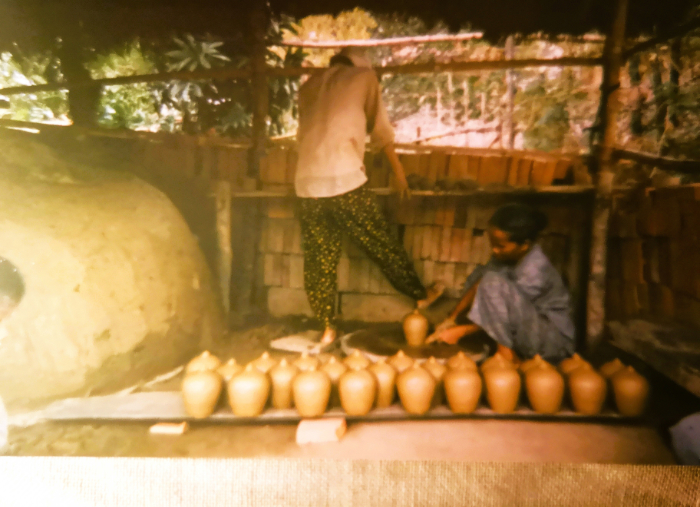
A 4 a.m. start was necessary to catch the local express bus which I was told would arrive at 7.00. What I hadn't realised was that meant not the same day but the next day - a 24-hour journey. The journey itself was also problematic starting with a row over my ticket which was given to the wrong person, a hot, squashed and crowded bus with little room and 3 stops for repairs. The silver lining was my instant celebrity among fellow travellers who would not let me buy a drink and often told me how beautiful I was in broken English - something lost translation I decided. I sat next to a young woman who by the end of my journey had given me her contact details in Saigon and told me that she would be pleased to show around the city when I returned. More of Miss Laon later. As we came into Danang the next morning the driver decided that it was not worth continuing to Hoi An. So, another three and half hours on a local bus ensued with an afternoon's sleep at the end. Hoi An turned out have a relaxed and friendly atmosphere and I found a restaurant where I was befriended by Kim, the owner who cooked specially for me. As we talked, he realised that I had been a teacher (it was easier to be a teacher rather than trying to explain community education). He explained that he had a second job teaching English to young students. He had a problem. He was due to teach that evening but had to work in the restaurant - Would I consider taking the class for him until he could get there. This seemed too good an opportunity to meet Vietnamese students and I was pleased to accept. The classroom was formally set up and the students looked at me with rapt and respectful attention. I did my best to explain some elements of grammar and then I thought I would impress them with some up to date participatory methods. I asked them to do some practice by role playing, with a partner, some situations using the learning. This led to some puzzled looks and a lot of embarrassed giggling as they respectfully left their comfort zone of formal tuition. It was a learning experience for students and teacher. After 2 hours Kim arrived to close the session and was grateful to have escaped the session. He explained the shortage of textbooks, and I was able to send him some books from England. The session earned me a special time at the restaurant following the class. The next day I was woken by loud speaking and music from loudspeakers attached to many lamp posts. I looked at my watch, it was 5.45 a.m. There was no chance of sleep, so I dressed and walked to the beach. There were thousands of Vietnamese people in the sea but no tourists. I walked along the beach amazed by this surreal sight and impressed by the patriotic music and peoples' response to the early morning wake up call. I carried on along the beach being greeted by everyone I passed. Children often shouted 'Lien Xho' - foreigner. There was a village 2 km on where people were using traditional tools in a small boatyard. There was net making, drilling with a bow and metal stick, traditional bow saws etc. One man told me how little people were paid. Even a high school director only earned around $18 per month. As I walked on several people started saying 'police' to me in warning tones. I saw why shortly afterwards when I saw a sign telling me that the boatyard was on the edge of a Vietnamese naval yard. Several boats were being corked and cleaned and people jumped into the sea to manoeuvre large boats onto to mobile ramps ready for hauling out of the water. Luckily, no one was on the lookout for a Lien Xho spy, so I came back without any harassment. I stopped to chat with another man who had friends in the U.S. navy in 1971 and dreamed of going to Mexico. He bought me a drink, and I bought him 2 lottery tickets. I went into town and saw a Japanese bridge, where I met the Director of an experimental centre for education. He also ran his characterful 200-year-old Japanese house as a tourist centre. It had roofs slopping in varied directions. Torrential rain started and he invited me in for a two-hour conversation until the rain stopped. This was the first time that I heard about the aftermath of the war. He described how the 'old regime' ran re-education sending people cycling in summer clothes 60 km up mountains in winter to cut logs and bring them back for the camp commander. Many people died. He told me that his father and that of Kim from the restaurant were imprisoned as former South Vietnamese army officers. Kim's father was fortunate to spend only 10 months in the camp as he was wanted as a footballer in the communist national team. His memories tumbled out and he recalled seeing the bodies of dead soldiers lying in the streets of Hue where he was a student. His greatest hatred was reserved, however, for the Russians. They, he said, had brought the country to poverty and their missiles, on Liberation Night, were used to attack innocent people trying to return to their homes. He was cycling from Hue to Hoi An, as he could not afford road transport, and saw streets and buses flattened by rockets. As he went on he spoke passionately about the lack of freedom in post war years, the wasted years and wrongs of the Communist Party. He resented the fact that in his business most of the tourist hotels were run by the state and he could not enter one as in the past they had been used to monitor contact with foreigners and punish loose talk. He was pessimistic about change and wanted to send his son to the University of Iowa to do what he had never been able to do. Talk of the war had started to emerge unbidden on the trip. The Buddhist monk had claimed that many American bodies still lay in the hills around Dalat and that U.S. death statistics had been massaged. It was also claimed that U.S. soldiers were still in Cambodia. It was a glimpse of how life looked from the defeated south and which rumours still had traction. Dinner at Mr Le Co's restaurant was pleasant, and yet more stereotypes emerged. A German woman managed hers with aplomb, stating loudly "The police need a little shouting and disciplining." Next morning was a 7am start for breakfast with Mr Le Co, which was simply iced coffee. We were joined by the Director of Education in Danang and his friend. The theme of suffering was again the focus of long conversations. All 3 men had been in re-education camps for 8,5 and 2 years respectively. They talked how in the latter stages of the war this area had been bombed and controlled by the South Vietnamese army in the day and the Viet Cong in the night. The next-door shop keeper interjected that he was in the South Vietnamese army but really supported the communists. They still complained about restrictions and told me that even with the slackening of travel restriction it was still illegal to house a tourist overnight and that plain clothed police still looked for spies amongst tourists. They all said that they had been pulled in a lot but were not scared now. The two visitors were enthusiastic, however, because they were to leave for Santiago, California soon as ex-officers in U.S. army battalions were eligible for citizenship. Their worry was whether they would find jobs in the U.S. We eventually decamped to a sewing machine shop where medicinal wine was served and soup so hot and spicy that Mr Le Co went red. One of the friends divulged that he was divorced and wouldn't trust his partner away from him. He wondered how I could leave my wife at home alone. Perhaps there was a clue to his divorce. Friendship continued and extended to the loan of a motor bike to visit a pottery and five Chinese temples, each built to exclusively house immigrants from their home province. Lots of gaudy patterns and figures.
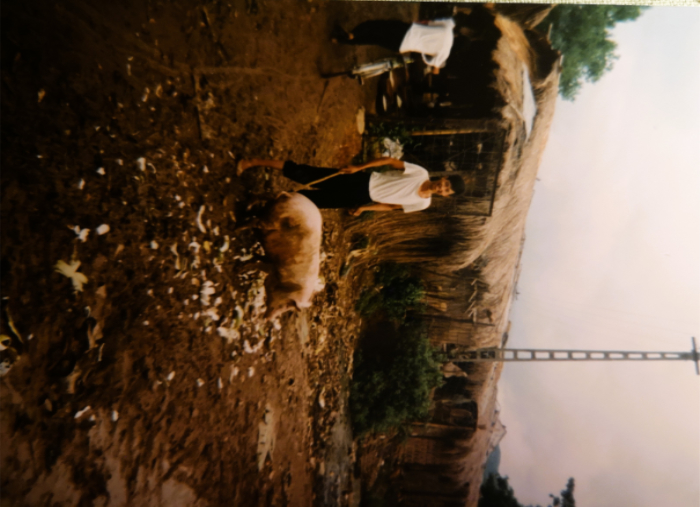
Carp turned into dragons, Chinese was taught, ancestors worshipped and protection was sought from the sea. An ancient Chinese house was a cornucopia of Chinese porcelain, paintings, furniture and statuettes rounded off with a letter from the last Emperor of Vietnam thanking the owner for their support and dated 1933. The day ended at a restaurant where a large crowd of Dutch tourists panicked at a small invasion of crickets and stamped on them creating an impromptu ethnic dance. Backpacking Index VSO Index Main Index Started with a 36 km drive on the sewing machine man's motor bike followed by a dull day in a hot and dusty city where I had missiles thrown at me at a market, there was trouble getting a train ticket. The journey was comfortable, but a two-way stomach upset suited the day. On the train one man was very keen to understand why I was travelling alone - police? Two other young men sat opposite me and eyed me suspiciously. They spoke Russian to me. I shrugged and tried to tell them I was British. I tried my phrase book 'Ahn' but in a tonal language it was probably unintelligible. They waited a few minutes until I was distracted and tried speaking in Russian again with the same result. They got off at the next station, but I was left feeling that it would not have gone so well if I had spoken back in Russian. As the train went further north houses became poorer-looking, shabby and dirty. Hills showed signs of destruction and replanting of trees. Arriving at 3.30 pm a hotel was hard to find, and I ended up agreeing to go to a hotel with a friendly Frenchman. We took separate cyclo taxis and after a couple of streets I saw my new companion disappearing into the distance. The drivers had kickbacks from different hotels. I ended up sharing with a 33-year-old Dutch man in the middle of a life crisis following the death of his father. He was travelling to dull the pain. After 3 years he still had a need to talk. We walked for a while and children way down below a bridge hurled a stone at as I walked across a bridge which, luckily struck the side rail rather than me. French was the language spoken for insulting Europeans in the North. Hanoi was a surprise to an uninitiated traveller. It was a reflection of previous French colonisation, with boulevards and lakes, much more beautiful than commercial Ho Chi Minh City. I hired a bike and rode around admiring the stylish buildings with lots of moulded decoration, balconies all painted mustard or white. There was very much a feeling of Paris in the heat of Asia. There was also lots of signs of entertainment, young people in an open air disco and live band, theatre, circus, zoo and water puppets. Not the puritanical desert I had imagined. I stopped at a roadside food hovel to buy lunch and sat with some V.C. soldiers holding a fractured phrase-book conversation. Yet again I was not permitted to pay. I had by now established a friendly relationship with the neatly presented young woman Miss Xuai, who was running the State hotel. She asked me how I thought she could attract more tourists. Knowing only backpacking I tried suggesting she concentrated on a memorable breakfast. Travel books often feature such things and backpackers are always attracted by such small luxuries. She told me she was taking a group to the water puppets, and I happily agreed to accompany her. The water puppets were enchanting. We sat in a small theatre in a semi-circle around a pool that replaced the usual stage with sets at the rear. Puppeteers stood up to their waist operating complex machinery to make dragons, fish and boats perform extraordinary feats in the service of the myths of rice field culture. Traditional percussionists created an exciting backdrop. Of course, it could not happen without the supporting cast of tour groups. Some French tourists decided to join in with their own enactments of traditional stereotypes, two making a big fuss about their seats and two more deciding to take selfies in front of the stage while the performance was in full swing. The magic survived. An early start got me to the train to Phu Lu. The train was not overcrowded but the seats were hard and the weather hot and sticky. Ph Lu was just the stopping point for transport to Sa Pa, a mountainous tribal region on the border with China. Plans, as ever, were changed by three breakdowns, two new engines and a three-hour delay which meant we arrived long after dark. Few people were in the street, but a smiling motor bike taxi rider was keen to help. No English spoken, no problem, I had a phrase book. I wanted a hotel, he nodded enthusiastically. I sat on the back of the bike, and we went off through the dark town. I became concerned as we began to leave the town and go over the river across a bridge. I realised why he was so pleased. He thought he had a fare to Sa Pa many kilometres up the precipitous road. I tapped him on the shoulder and pointed back to town. The phrase book helped him understand that I wanted a bed for the night and we drove on railway lines to a row of single rooms by the track. He invited me in and I realised that this was his home. The room contained a large double bed, with a wooden platform to sleep on without a mattress. Other than that, there was a just a wooden settle and two small chests. After struggling for a while trying to understand each other a friend arrived who worked for the railway and spoke English. The motorcycle driver's wife had gone to hospital with his son in Hanoi. He had a spare space on the bed, so I was to sleep in his wife's space. The friend explained how I could get to Sa Pa and I washed at the 50m well outside and relieved myself at the rail track before settling down for a brief sleep on the hard board accompanied by yelping lizards on the wall. Up at 3.45 a.m. for a quick well wash. The sweet man would not let me pay for anything. He even wanted to take me into town on his motorcycle, but it failed to start and we walked together to the station. As the sun rose the smallness of the town was apparent. It was like a wild west town from a cowboy film; raised boardwalks in front of wooden houses above a dirt road. A woman walked past with a pig on a lead attached to it's rear leg, which was tugged every so often to remind it not to run away. The bus was $2 and the motorcycle was $30 so bus it was. Fond farewells and off to the hills. The bus was uncomfortable and wound its way along the single-track road that classically spiralled up the mountain disclosing new spectacular views at every hairpin. Occasionally a vehicle came the other way necessitating a choreographed ballet at a passing spot. After a 3-4 hr journey I arrived at the end of the known world only to find myself following a disappointingly large number of tourists to the only hotel. The service was unfriendly raising fondness in me for my last host. I started to explore straight away. We were at the top of the mountain looking out across a steep wide valley sculpted with contours of rice terraces which made it feel that you were on a live OS map.
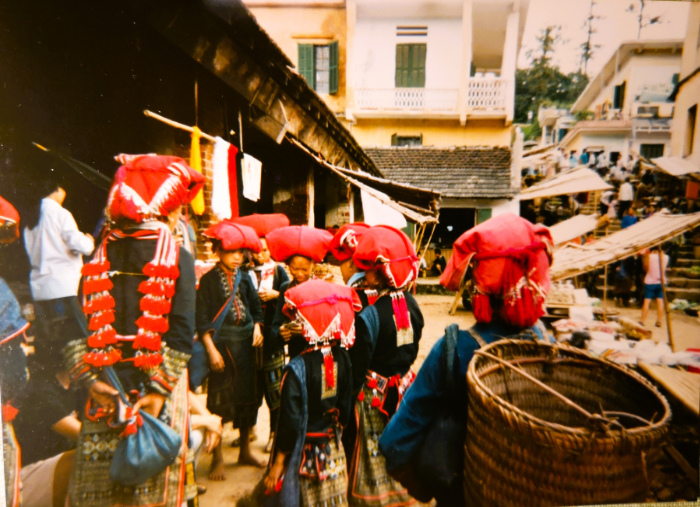
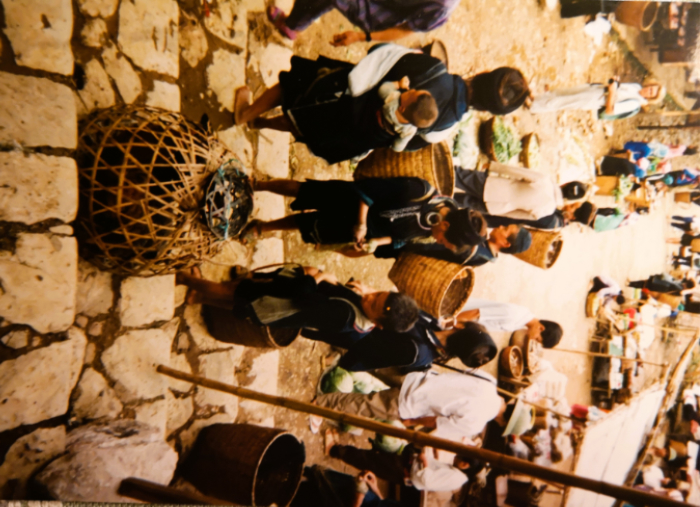
I came upon a small group of men demolishing a wall with a tree battering ram and I joined in with them with incomprehensible builders' banter on both sides. I went in every direction for short walks between heavy bursts of rain meeting up with my builder friends on the way home for another bout of phrasebook/mime laughter. The market was full of colourfully dressed people from different ethnic groups.
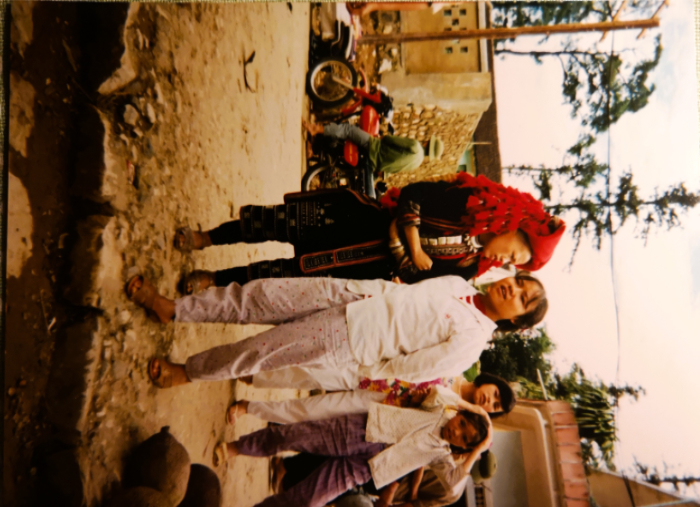
Women of all ages were spectacular in Chinese style tunic blouses, leggings and puttees topped with red or black head dresses. Some looked as though they had tasselled cushions balanced on their heads.
I decided to walk down into the valley and enjoyed another mimed walk back with a diminutive older tribesman in the now sweltering heat, followed by women with large bundles of firewood on their shoulders. Dinner was in a large agricultural style building where I spent a very pleasant time with a dentist, called Louis, from the French Alps who pointed out to me that that the local hill people had very good teeth and must have a good diet. As the evening deepened the tribes people wandered in to watch the only TV raised up high in one corner. As we wandered over by the TV a very old man and his equally aged wife approached. He opened up a match box with something brown inside. I was puzzled but Louis clarified the transaction. "Opium" he explained. I politely declined the offer from probably the oldest dealers in the world, but it still felt impolite. They melted into the background before anyone saw.
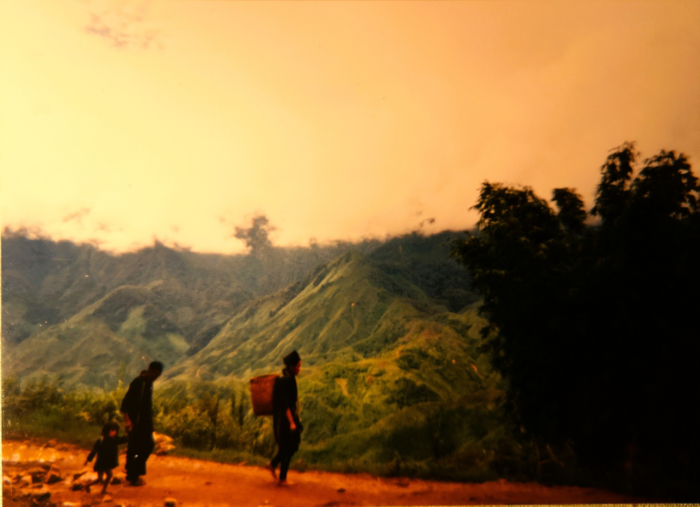
We ended up talking to a Vietnamese hydraulics engineer from Hanoi who wanted to talk in English. His specialist topic was the 1979 invasion by China which, he claimed, caused a lot destruction to the even more beautiful area of Sa Pa in that time. He went on to say that a tiger had been shot only 3 miles from Sa Pa. Our hotel contacts poured scorn on the idea of wild animals in the area, it must have escaped. It transpired that he was another example of Russian influence, having spent five years training in Moscow. He was staying at a local government hostel, and we walked with him to his 4 to a room basic accommodation where we were enthusiastically entertained. He talked of local tribal people and told us that the Government was trying to destroy 50 hectares of opium poppies grown by local people. I thought of the effect on our OAP, County Lines operation. The China theme continued next day on a long 18k walk along the main hill tribes track with Louis the dentist, and a French/Austrian couple who had just come through the border from China. They described how in spite of faxes sent to embassies etc they met the immovable force of border guards who held them for two days. They were forced to pay $30 to the Chinese and $40 to the Vietnamese as well as signing a confession that they had falsified visas. They explained that negotiating Chinese cultural differences was tricky. Saving face was a crucial aspect which involved convoluted interactions and manners. The woman had on one occasion burst into tears which the guards thought hilarious. Laughter was provoked by perceived loss of face. They also described how people in Chinese cities were deliberately unhelpful to foreigners and one fellow traveller reported being urinated on from above at a railway station. This all made negotiation almost impossible. At the time China had not opened up to the west and had a long history of isolation and anti-western/foreigner propaganda. The walk was delightful, but 36 km was exhausting and water cascaded down the mountains across the track. We came across some local characters including a funny diminutive man who boasted that he walked 25 km to a bar to get drunk. Sure enough, we came upon him in a bar later on the walk and he was drunk. Tea was taken in a bamboo hut with a fire in the centre of the room that blackened the ceilings. The Hmung people wore big earrings and big smiles. The evening was a tired affair enlivened by a serious fight between 2 young men; over money we were told.
The next was the dreaded trip by bus down the mountain. I was squashed into a back seat on sacks of rice with little view. At one hairpin the road nearest the edge had collapsed into the valley far below and a temporary repair using rock rubble had been attempted. The bus stopped and discussions took place. I was pleased that we all descended from the bus before it slowly drove round the bend and onto the firm road beyond. As I could not see I entertained the locals with a medley of my favourite songs which seemed to go well. At Phu Lo we met another stereotype in the form of an Austrian philosophy academic who told us what we know about everything including "you can't apply western arguments to their conditions, they don't know anything different". It was one of those occasions when you know it is pointless arguing but get drawn in any way. Phu Lu had even more of a spaghetti western feel with ersatz cowboys on motor bikes, more pigs and water-filled potholes. I decided to take the hard seats train carriage to save money. There were some dodgy characters milling about. Two burley young men stood at the end of the carriage. One eventually came to sit next to me. I felt uneasy and kept watch on my bag on the luggage rack. A person on the other side of the aisle made eye contact when the young man was distracted, warning me to be careful. After a while they saw that I was paying attention, the standing accomplice walked up the carriage and signalled his friend to follow to look for easier prey. I relaxed. Other passengers chirped up that they were after my bags. The night brought hardly any sleep as officials came around hourly to shine torches in your eyes, demanding to see tickets. Back in Hanoi I found my way back to Miss Xuai at the state-run hotel and spent time chatting. I ended up going to the theatre hoping to see a traditional show but that night it was an opera. The sets were very basic amateurish flats. Music was provided by electric guitar, piano, drums etc and the mixers and sound equipment were scattered haphazardly all along the edge of the stage. The singers were very good and the acting strong, set off with beautiful period costumes whose effect was slightly diminished by the microphones and power packs attached to them. The audience of about 100 people, many of them children filled about a third of the seats and only 2 westerners. The other European spent most of the time asleep and I have to admit that I nodded off from time to time. The atmosphere was informal and when not playing musicians wandered about, sometimes taking seats in the auditorium. Although the music was Vietnamese, the performance had many features familiar to a western eye. There were panto characters, principal boys and girls, and an evil character and themes of love and tragedy. It was sung and acted with great skill and vigour. The only problem was that the performance was long, ending at 11 p.m. At the end of the performance there was no standing ovation, simply a scattered ripple of clapping and as the actors smiled and bowed there was a stampede for the door. The auditorium was empty by the time the last actor had left the stage save for me still clapping. Back at the hotel Louis, the dentist, had turned up with his friend Jean Claude and we were enthralled by Vietnamese tales of Moscow, secret police and selling Indian soap powder to Russia all enhanced by a voluminous supply of whisky. Backpacking Index VSO Index Main Index Miss Xuai was keen to fill her quota of tours. We tourists managed to rise a little blearily at 6 a.m., decided on which trip to take and set off for a bumpy ride to Haloon Bay for a short trip round the bay and a quiet evening at the hotel. Next day was the real treat, a boat trip further out into the bay noted for cyclones. We manoeuvred in fluorescent green waters between giant menhirs of rock rising like statues from the sea. It was like being on a film set. The boat was stopped for swimmers and after lunch we set off for Hanoi. The trip was enlivened as the bus was crawling towards a bridge in a queue of traffic. A middle-aged American man became impatient and decided to walk beside the bus. Suddenly, the bus driver saw his chance and sped off up the side of the traffic queue leaving the walker in his wake panicking and running as fast as he could. He arrived panting about 150 metres on. By 6.30 pm we arrived at the hotel to be met by a worried looking Miss Xuai - I had gone on the wrong tour. The evening took a turn for worse for poor Louis who had found out that Vietnam Airways had sold his ticket and the saga worsened as the day proceeded. We went for a walk around the lake after dinner and as we returned a cyclo taxi pulled up beside us trying to persuade us to ride. I playfully suggested that I would offer him a ride and found myself cycling him twice round a very large roundabout as he luxuriated gleefully in the back. Great hilarity ensued. The trip was beginning to wind down as I headed back towards Ho Chi Minh with stops along the way. I met lots of people who wanted to talk English, a doctor from Na Trang trying to help the 60% of rural children malnourished in Central Vietnam (she wanted me to visit but I had run out of time) and a cigarette factory manager who took me round Hue on his motor bike and introduced me to a University teacher who complained of the regime's favouritism for people in the North. Night provided a long and spectacular thunderstorm. The next day I cycled out into the rice fields with lush green vegetation lined with coconut palms. A haunting reminder of the war was the kilometre long cemetery on both sides of the road. I Left with a lovely image of man flying a beautiful home-made bird kite. Back to Ho Chi Minh City/ Mekong Delta. A 1.30 am the train left for Saigon for a long uncomfortable trip. As ever, the busy city is always better when you return attuned to the cultures. The last few days were a mish-mash of chaotic big city experiences. Ferrys to small mekong towns, friendly and generous local people including an '85 Cambodian campaign veteran who had lost a leg and an aircraft controller/mechanic in 1975. A rusting, floating restaurant, boat people living in small wooden boats, coconut lined village streets and markets. The excitement was already mounting for Vietnam Day. People were already setting off firecrackers, drumming and transporting Chinese dragons on trucks. A small ferry boats eventually took me back to the mainland, of course paid for by a retired teacher who would not let me pay. The next day, September 2nd was official Vietnam Day. The streets were packed with people in flamboyant but misjudged dress and roads uncrossable with hundreds of motorcycles. It seemed that loafing and adolescent fun were the core of the day, so I decided to visit the zoo. It took a long time to get close to the zoo through the packed streets but as I approached the Monsoon struck. I ran out of the torrential rain into an open fronted cafe. As I sat with my cup of tea the water rose until the only solution was to sit with your feet up on the table. Everyone was in festival mood, however, and I persuaded the cafe owner to take an eel (in a tank ready to be boiled alive) for a walk in the monsoon flood to give it a Vietnam Day treat. Much merriment. On the wet walk home, I came across a female hairdresser offering a dry wash (creams without water) and scalp massage along with good, humoured banter, which was a perfect way to end the day. The next day I phoned Miss Laon, who I had met on an uncomfortable bus early in the trip. She had asked me to call when I arrived in Saigon. She was very demur and well-dressed in a car with air-conditioning. Me Miss Laon and her cousin took me for a walking tour of the gardens, a river cruise, lunch and window shopping. Then another monster Monsoon storm soaked us and drove us into a cafe again. In the afternoon we went to a film. The cinema was unusual in that the seating consisted of double settees spaced out around the auditorium. The unmemorable film was shown on a bad projector with bad sound and all speech dubbed by a single female actor. We finally visited a beauty spot with dancing and the day ended with a walk by the brightly lit river. We agreed that I should visit her at her mother's house next day. Next morning I visited the Museum of War Crimes which was as upsetting as it sounds. It was a view of the war from the Viet Cong perspective. One particularly chilling exhibit was a copy of a magazine produced by U.S. soldiers for other soldiers. There on the front page was a small group of smiling soldiers sitting on the ground like Edwardian animal trophy hunters. Gradually I became aware that on the ground in front of them was not dead animals but the severed heads of four Viet Cong. A reminder of how the worst of humanity is unleashed by war. There were other moving reminders of a terrible time with pictures of the Mai Lai massacre. Inevitably, the photos were heavily interpreted and a whole section was devoted to regime propaganda and 'enemies of the state' where I thought I saw Kim (Head of Foreign Affairs) from the Hoi An restaurant. Afterwards I went across town for lunch with Miss Laon and her mother, who was a half Chinese powerhouse. She served us a magnificent platter of Chinese food in a plush upstairs room. She only spoke French so communication was rather stilted. When the food was taken away we sat in comfortable chairs for after dinner tea. She enquired whether I liked Karaoke. I politely answered that I did. She switched on the TV and video machine and treated me to two hours of her singing Vietnamese songs. A home video of Miss Laon in France and I was ready to make my excuses and leave. Next day was the plane home. Miss Laon failed to keep her promise to take me to the airport in, what turned out to be her mother's car. However, when I arrived at the airport there was Miss Laon to say farewell with a bouquet of flowers. Old world charm. Vietnam had been a generous and welcoming host with plenty of scars from a damaged past that had not soured its spirit. At the airport there was a huge queue of Russians many of whom had giant bales of material of various types. It was obvious that money was changing hands and I hoped that we were not overloaded. Aeroflot kept up its reputation for customer care, leaving One and half hours late, landing in Hanoi and Delhi before arriving at Abu Dhabi after 12 hours. It took another sixteen hours before arriving in Heathrow.
Backpacking Index VSO Index Main Index
|
||
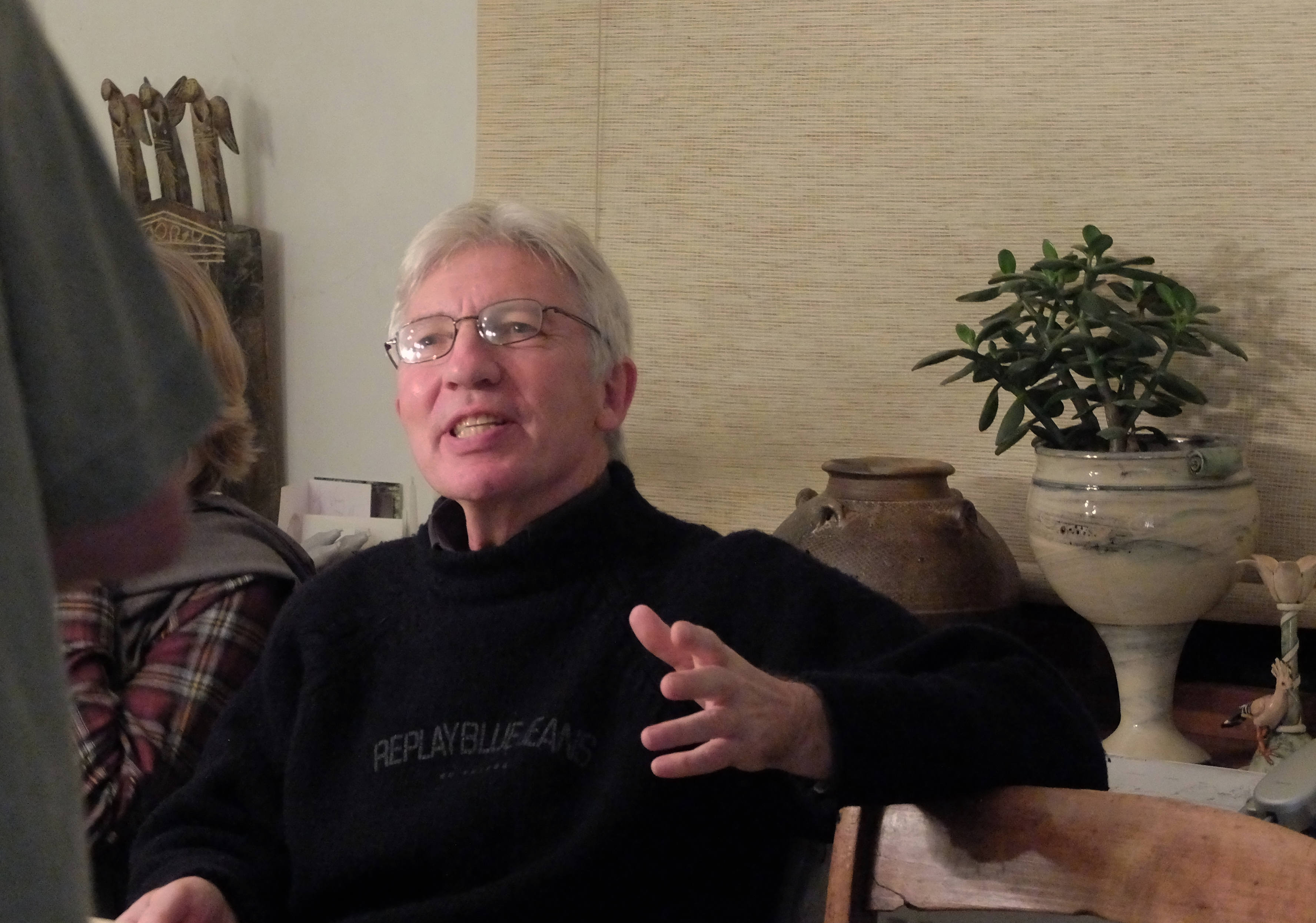
Paul Hague explains. Backpacking Index VSO Index Main Index ***************************
|
||