Colombia 2002 |
||
At the time, the country had a government struggling to combat the Marxist FARC guerrillas and their far-right opponents ELF both of whom controlled areas of the country and engaged in hostage taking and drugs production and trading. The bus journey from the airport to central Bogota was long but uneventful and the city felt hot, dingy but calm. I checked in at a backpackers' hostel populated by a variety of young Europeans and a mid-twenties Australian woman who had been in Bogota for three months. She had shown some initiative by advertising English language teaching in a city newspaper and been hired by a rich Colombian. She had an almost incomprehensible, thick Aussie accent and I amused myself with the thought of the poor Colombian learning to speak English with her unique accent. I quickly, received the first of many guerrilla stories that followed me around the whole trip. In this case, a British, Swiss girl, and an Israeli, had been taken by guerrillas when they failed to announce their trip. The guerrillas were sensitive to MOSAD infiltration and demanded bank account details etc to check their stories. The Brit had managed to escape and after 3 days in the jungle, was taken back to Bogota . I stayed for two days before following my usual practice of leaving the big city as soon as possible. I quickly decided that Colombia, with its 'no-go' areas suited a circular route by bus up to the north on the Eastern side and a return down the west. The large Eastern part of the country was under the control of Marxist FARC guerrillas, who, by reputation, supplemented their funds by drug trafficking and hostage-taking or killing. Travel in these areas was definitely advised against by all sources and there were news stories of hostages being detained for years. A week before I arrived there were reports of the arrest of an IRA member en route for fraternal dialogue with the FARC. I was not surprised to find myself and my UK passport viewed with suspicion at a checkpoint, which thankfully did not lead to further action. First stop was Tunja, with its prosperous spacious square and Bolivar statue, and then Villa Leiva, full up due to a festival weekend, with lots of Rannas on prancing horses, wearing Spanish cowboy hats .
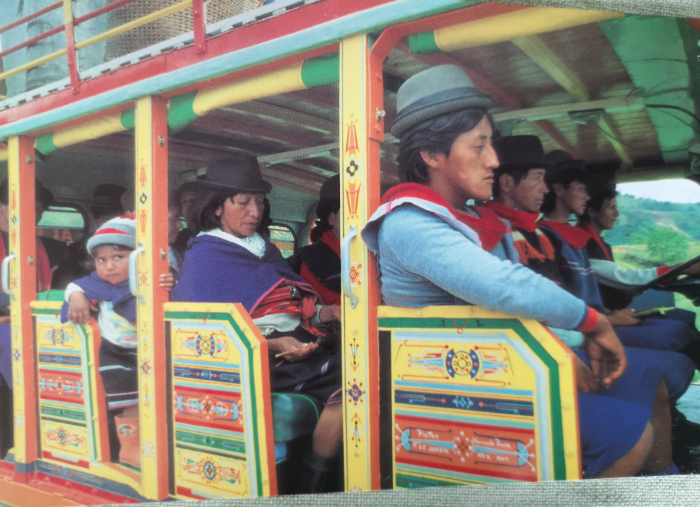
Next stop Santa Marta and Cartagena on the North coast at the Caribbean Sea. The bus trip took a route through San Gil and Baranquilla , with a wonderful high range of mountains, streaked in the evening sun with pinks, greys and browns, that changed as the bus travelled through the panorama. A snaking road ran alongside sheer drops, with worrying small rocks topped with sails, memorials to those who had gone straight on, rather than turning the corner. Most preferred the video and had the curtains closed, despite the free vista . At 3a.m. I was woken and told that we had arrived. "Santa Marta? ", I enquired. It was not. I with 3 a.m. scrambled Spanish, tried to protest that I had booked for Santa Marta. A succession of people became increasingly frustrated with the 'stupid foreigner' adopting the British technique of saying the same thing, but louder. A taxi driver circled sensing a juicy fare. Eventually, I understood that we were in a small town, outside of Santa Marta; it was now 4 a.m. and buses started at dawn. I would reach town by 7 a.m. Santa Marta was a cosmopolitan town which proved to be a gateway to a six-day trek in the Sierra Nevada de Santa Marta, a belt of high mountains leading to the ruins of an ancient Kogi city - Tyrona. I had recently attended a talk by Alan Ereira who had been chosen by the reclusive Kogi on two occasions to warn the world of the damage they were doing to the earth, so this was a golden opportunity . A trip was leaving almost immediately . I prepared with a training course at the bank. The doors opened at 8 a.m. with January sales rush through the double doors. By 9.30 still no money changed. The photocopier was broken, the computer could not be made to work. It seemed that all of the money had been spent on marble floors and columns. I had to find a shop with a photocopier to complete the deal. A motley group of seven tourists set off with a friendly, confident young Colombian guide, Wilson, on a long drive to Chiva. Friendly chatter developed as we walked into increasingly steep and bouldered , rocky mountain paths for 4 hours. We climbed steep slopes and descended into deep valleys with shallow rivers to wade through and bathe in.
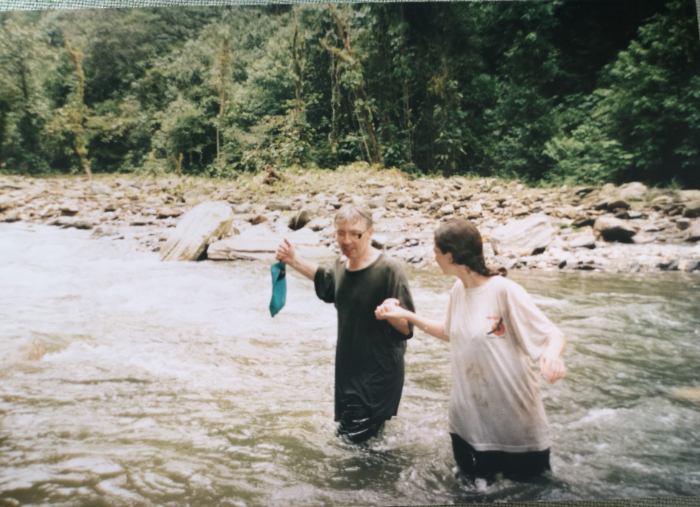
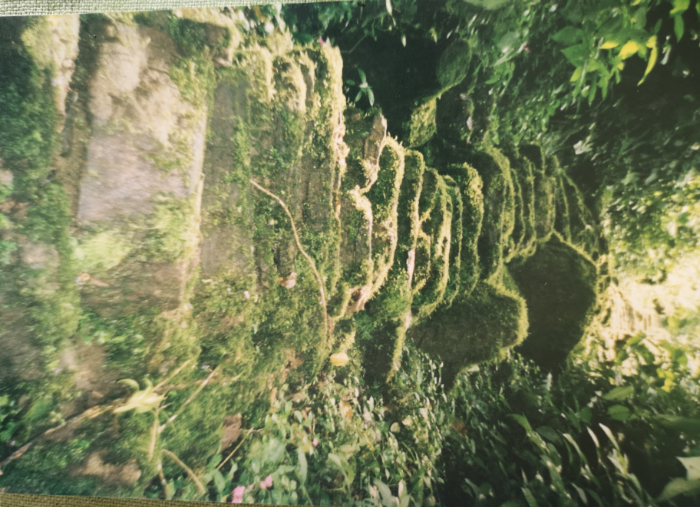
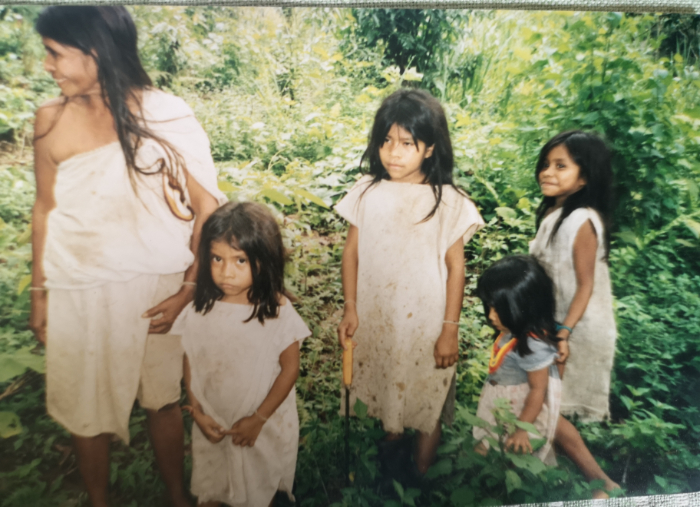
We passed a Kogi man and his wife with their pig. He kept his back to us. At a river crossing we passed two ELF paramilitary soldiers. Human habitation was sparse and we were all grateful to reach a large barn like building, where we were fed and given a hammock for the night. Context began to emerge , • ELF paramilitaries, the right-wing militias, linked to big companies, controlled this section, but other guerrilla groups controlled the other side of the mountain. The ELF issue tour permits. • Wilson assured us that the Kogi also give permission. • An Israeli tourist claimed that another tour guide told him that tours are sometimes used for cocaine runs. Two guides leave, one drops off at the factory, another carries on with the group . Our tired and aching bodies slept easily. More of the same next day, although the walking was less demanding. The rivers were up to 20 metres wide with impressive rapids. More people today; Assario indigenous people in sombreros, Kogi and Awakos , each with their own territories . There were large areas of coca-cultivation and a campesino- owned coke production house. Coca is still the most profitable crop, but the campesino were talking of not growing it next year due to U.S. threats of crop destruction through aerial spraying. The indigenous people would still sell to them . We ended at a Kogi-owned small-holding of one rough-hewn wood building and two open barns. The young Kogi couple had beautiful fine-featured faces, reminiscent of Vietnamese people, but were very shy, though, apparently, happy, to be in company. The one child received loving attention. We were told our first Kogi tales. • The Kogi do not want twins and kill one. The reason given was that women do much of the work and can only carry one child. I was not sure about that. • Men make the clothes, women embroider them • Planting is done by men and harvested by women in line with fertility beliefs. On the third day, we crossed rivers about ten times. I learned quickly that long trousers acted like underwater sails and changed. We were wading up to our thighs and waists. We passed waterfalls, including a spectacular double fall. At one point we had to negotiate a narrow path 20 metres above the river, which sometimes became a ledge. Paula screamed as Eric, an Israeli, slipped and slid five metres on his stomach, ending in an undignified, but unhurt, heap clinging to a tree . We passed several Kogi dwellings and several people on the path. Most were courteous but disinterested in us. Most house occupants were female . As we were told we were getting close to the Cuidad Perdido dark clouds began to gather. We made an undignified entrance. As we climbed the first few stone steps to the entrance, rain began to fall, lightly.
As I counted the steps, rain fell more heavily; by step 1,000 it was torrential; we climbed more than 2,000 steps before we reached a plateau with two houses, circular, with two floors, and an odd roof mixing circular and pitched roofs. We ate in one and slept in the other. The six people, there to maintain the site also looked after us, as we wrung out our clothes. Fed and warm, we relaxed in the evening and entered an animated and heated discussion with Paula, a woman with deeper experience of Columbia than the rest of us. She had a degree in Peace Studies and had been working for a local NGO in Bogota, studying the scale of the displacement problem and the government's response to it. She had not been paid for month and could not continue. She had strong views • Many NGO workers had been killed; people with more liberal views of the guerrilla cause were seen as an enemy. Journalists were particularly under threat. • The U.S. were paying mercenaries to train the army in anti-guerrilla tactics. • The U.S. spraying of defoliant was a danger to health, confirmed by a G.B. company refusing to supply them. • The U.S. government uses the idea of a war on drugs, as a cover to protect their oil supply (Colombia is the third largest supplier) and stop a Chavez-style take over. To that end they back anti-guerrilla militia, big companies and the government. • The Colombian government is totally dependent on the U.S. and is not strong enough to defeat the guerrillas. • The paramilitaries are private militias, hired by the big corporations, landowners and the government to drive poor indigenous people from land wanted by them. • Mercenaries, funded by Dean Aitcheson, U.S. Secretary of State, recruited by Manpower in Columbia to train the army and maybe in combat roles. • The guerrillas had the power to take over the government any time in the last ten years with huge popular support but didn't seem to want to run the country. They started with socialist ideas but became more interested in money and now have no defined ideology. • She felt that peace was difficult while both engaged in violence during talks. • Many rural people are now trying to go to the cities. Tyrona, was only partly accessible to tourists, partly because of lack of labour to keep the huge site clear, and also because the Kogi block off a path to another part of the city to protect their ancestral heritage from tourism. The city extended four hours walk to the west and an old map, carved on a rock, shows 3 separate centres. The city was thought to be mainly ceremonial and sparsely inhabited by mamas (priests) and artisans . A large rock in the temple area represented a toad, the female symbol of fertility. When the Spanish came to Santa Marta, disease and supply difficulties caused abandonment of the city, leaving it to grave-robbers ( wackeros ), but not the Spanish, who never discovered it. We also learnt more about Kogi culture. • The Kogi base their lifestyles on their belief in "Aluna" or the thoughts of "The Great Mother", their creator figure, who they believe is the force behind nature, prior to creating the universe. The "Mother" is called " Gaulcováng ", and, beyond the creator-goddess having created the world in a primal sea based on a number of pre-existent images in her mind (" aluna ") • The incestuous relationship between the "mother" and her son ( Sintána ), which gave way to sibling incest among their children, gave birth to humanity. • The Kogi understand the Earth to be a living being and see humanity as its "children." They say that our actions of exploitation, devastation, and plundering for resources is weakening "The Great Mother" and leading to our destruction. • the Kogi honour a holy mountain which they call " Gonawindua ," otherwise known as Pico Cristóbal Colón . They believe that this mountain is "The Heart of the World" and they are the "Elder Brothers" who care for it. They also say that the outside civilization is the "Younger Brothers" who were sent away from The Heart of the World long ago. • From birth the Kogi attune members of their society, called mamos ("suns") or mamás , for guidance, healing, and leadership. The mamos are tribal priests, highly respected in Kogi society, and are not shamans or curers. To assume this role, Mamos undergo strict training from childhood, starting at least before the age of 5 . It takes place in isolated, high-altitude places of a few houses or caves. Elder mamas care for, feed, train, and teach the child to attune to their thought before the boy enters the outside world. During training, the two or three novices ( kuívi : "abstinent ones") are trained to overcome the dates and cycles that decide events, through abstinence in sexuality, food consumption, sleep and nightlife.
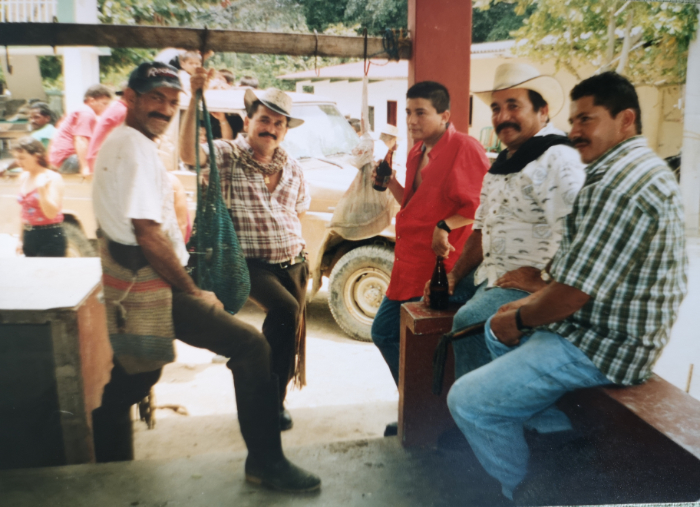
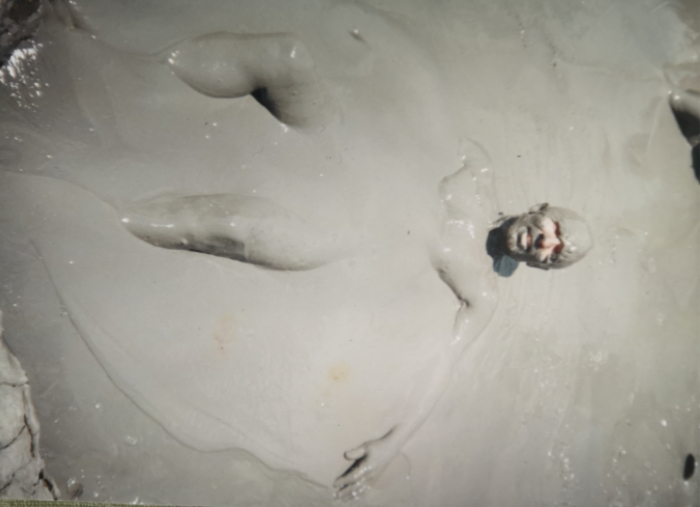
• Through deep concentration, symbolic offerings, and divination, the mamos believe they support the balance of harmony and creativity in the world. It is also in this realm that the essence of agriculture is nurtured: seeds are blessed in Aluna before being planted, to ensure they grow successfully; marriage is blessed to ensure fertility; and ceremonies are offered to the various spirits of the natural world before tasks such as harvest and hut building. • As with much tradition, the modern world weakens practice, although one local Mama is trying to reestablish degraded rituals in the city. • Males carry poporos (gourds) filled with lime made from heated shells and used with chewed coca to produce a mild stimulant. All carry shoulder bags with sacred objects inside. Their way of life is agrarian and self-sufficient. • Several years ago, a land slide caused a huge blockage. The government wanted to dynamite the blockage to remove dangerous shale and prevent further slides. The Kogi people blockaded the area- Mother Earth will sort it. Some months before travelling I had attended an evening with a rather self-important BBC documentary maker who spoke about the Kogi, who he described as so remote that he had to get special permission to enter their villages by the single road access. It turned out that Alan Ereira and his film crew had been chosen by the Kogi in 1990 and 2012 to deliver a warning to the 'younger brothers' outside about the damage they were doing to the planet. Whilst our visit was considered low impact tourism, we were the tip of the iceberg , and mass tourism in the future is the biggest danger to their way of life. We 'younger brothers are yet to listen to their warning, The three-day walk out was condensed into two days on the way back. The early part was made more difficult by rain-swollen rivers. There was one more river to cross. Although, about 20 metres wide, the water was still more than knee deep at the crossing point. The guide started to cross upstream, holding the hand of the most nervous of the travellers. I looked up to see that the water was flowing too strongly for her. A third of the way across, she fell, pulling the guide down with her, releasing his grip. They both started to be swept along by the strong current, Wilson, swallowing water. Luckily, we had time to react, and it was simple enough to wade carefully into the river to intercept her uncontrolled progress. Gay, an Israeli, had rushed in too quickly, and, for a moment looked as though he would become part of the problem. I imagined gushing thanks from our friendly guide for my act of selfless heroism, but his macho ego had been bruised, and nothing was said as he took control of her crossing again. On the way back, after lunch, we started the four hours walk with an hour of steep, slippery climbing to a high ridge. We were congratulating ourselves on reaching the top when the thunder rolled and a violent lightning storm broke over us. The rain was so heavy it was impossible to see with or without glasses. As I reached the skyline the loudest clap of thunder roared, exactly overhead and rolled around the valley. It felt as though we were treading close to the home of the Gods and made us feel small and vulnerable. The two hours of the trek was through flash streams of water; it was a 'grit your teeth and get through' time. We did not stay up long. The final stage was a walk back to the small, starting village. On the steep downhill sections, I developed a game of staying behind the group and then skipping down quickly, stopping just before I caught them up. I decided to challenge myself on a long steep slope. I left a long gap between myself and Paula and launched off down the slope. I realised that I was gathering pace and the gap between me and the others was closing too fast; The choice was simple; carry on getting faster and skittle the group or find a way to brake; My feet shot out in front of me, my back hit the ground hard. Luckily, I managed to dig my heels in, and in spite of her scream, I stopped two feet in front of her. The cost, a painfully, jarred ribcage for the rest of the walk. As we came towards the village we saw a large mansion in an isolated position across the valley. "They make cocaine there," our guide casually mentioned to me. It was Sunday, and this was the day for dressing up and going to the bars to socialise. This was a genuine, wild wet theme park. As we came into the village, music blared from each open-air bar. When we stopped for a drink at the main cafe in the square we had an unexpected experience. Several, moustachioed, men on big horses rode into the square, each in a Spanish cowboy-style hat. Stetsons with a huge curve to the brim. They looked stern and serious and for a moment it seemed as though they could be here for us. But they looked disdainfully in our direction as they tethered the horses and then ignored us as they headed for a bar. There was a full house, mainly men and some wives. Horses were tethered at the side and a horned, head of a decapitated cow lay on its side on the tiled cutting table at the front of the patio bar. A man rested his arm, casually, on one of the horns. The men all wore machetes in sheaths, like swords, at their side. Each sheath had a leather fringe running its length. They wore baseball caps, or more often, Stetsons with crowns decorated in leopard skin or leather trim. Banderas were plentiful. At centre stage was a handsome older man, wearing white shoes, trousers and shirt, topped with a leopard skin-patterned Stetson. He talked to everyone, perhaps he was the mayor. Every now and then, a new cowboy would ride in on a donkey or a motor bike, raising interest and dust on the wild west dirt street. They were pleased to have their photos taken. A perfect end to the trek. Note: A few years later a group undertaking this hike were abducted and a daring member had escaped by rolling down a bank, undetected, walking back to raise the alarm. Backpacking Index VSO Index Main Index Santa Marta - Cartagena de Indias The bus ride was the usual jig saw of bus drivers making a buck and then pushing you off to another bus. I finally, made it via Barranquilla, a larger city. Cartegena was an early 16 th century port established as a key defended position on the route to the West Indies. It was involved in slavery, Bolivian silver, and latterly, tourism. The ramparts with old canon protected us from pirates and the small old walled city was very accessible with the promised balconied colonial buildings, colonnaded, courtyarded plaza and grand religious edifices in a state of decay . Francis Drake had attacked it and the narrow streets had tunnels, built to move under bombardment. A place to visit, but not to stay. Tired but in the warm glow of achievement I took a day and then travelled to El Tortumo mud volcano, near to Cartagena. To avoid the tourist bus crush, I walked the 5 km to be greeted by an unimposing hill and yet more Israeli tourists. Here you climb a laddered path up the side of a small slope to the top of the volcanic hill and trust yourself to enter the hot mud, reputedly unfathomably deep, and luxuriate in the arms of the volcanic mother.
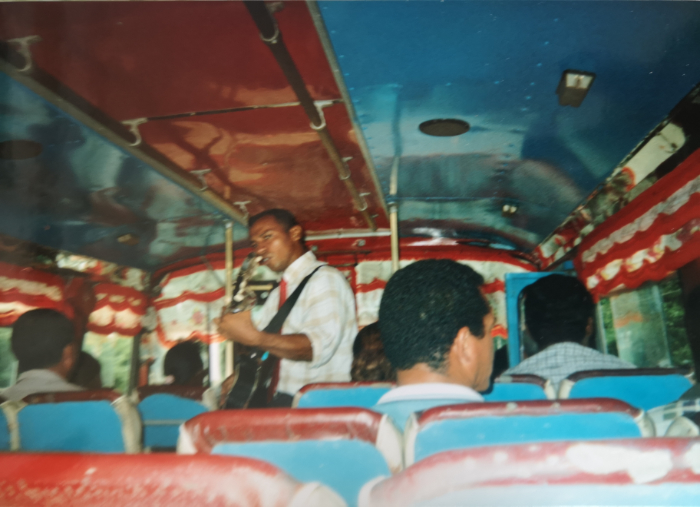
Emerging, with a head-to-toe coat of grey-brown mud, only your smeared white face is recognisable. The final stage is to head down from the volcano to beach for a lake wash. As I reached the sea I was enveloped by a group of large ladies who offered no choice but to accept their paid services. If the volcano mud had been your goddess mother, the ladies were its earthly form. Like a child you stood immobile as brisk hands scrubbed you clean and sent you on your way. Their part of the tourist trade did not make them rich, nor the small stallholders with no change. It was good to support them. A troubadour enlivened the trip back. As we set off, a man in his 30s stood in the aisle of the bus with a guitar and sang mellifluous songs with a beautiful crooner's voice. I felt sad that this man had neither the situation nor opportunity to make more of his talents. When he had finished and collected his coins we chatted the rest of the way to Popayan. He was not unhappy and resigned to his lot.
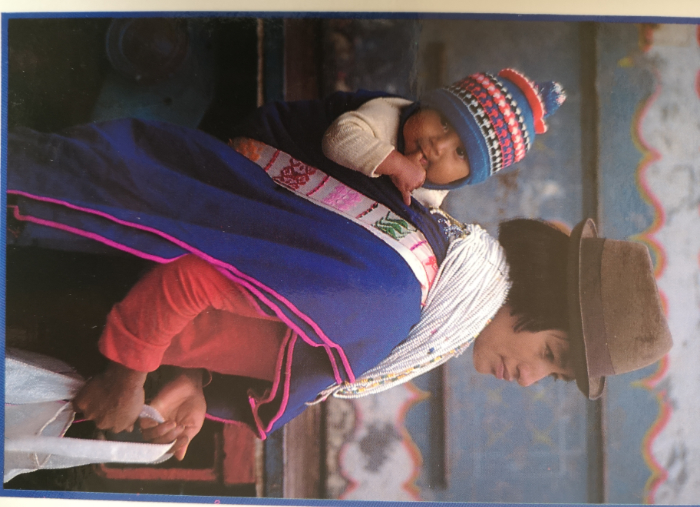
An evening in Cartegena offered me the opportunity to patronise a young rasta man. I instantly decided money would go to drugs and offered him food instead. I took him to a shop and asked if he wanted a sandwich or other meals. No, he wanted chocolate ice-cream. "Don't you want something healthier?" "No, my mother and father ate chocolate, it will keep my body going." perhaps drugs would have been healthier. I decided to try the healthier option and found a small one-roomed restaurant run by an aging Italian Marc Bolan look alike in hippy cotton trousers. He was engaging with a smoke-filled, gravelly voice that came from deep inside his small frame. The room was covered with an Internationale football flag and other memorabilia, he was covered in tattoos, as was his partner. I saw that a second room was 'Franco's Tatoo Parlour '. A second Italian, with a ponytail, joined the diners, and shortly after two Colombians arrived. He rose, I thought to serve. He seemed to be telling them that there was nothing here for them and they should go somewhere else. They left, the man with a quizzical smile, the woman with a look of distaste. This met with general approval from the hangers on. The meal was horrible, but the company enjoyable. The bus to Medellin was a long 12 hours. My first impression at the bus station was of a highly westernised, and modern. It was a centre for drug cartels, so there was plenty of cash around. I took the metro across town and booked a bus to Popayan, in the evening. I left my bag with the bus company and looked around. I found the largest 1930 sun-dried, brick cathedral in the universe, as I dried in the blazing sun. It had astounding pillars on an Egyptian scale with an alter and internal pillars in pink marble. It was brimming with , mainly, older people. The portrait of worship within was an artwork in itself . A woman was prostrate in front of the skeletal remains of San Pedro in a fully illuminated fish tank. Many others formed a gallery of faces in rapture, pain or puzzlement; in one case, a man was fast asleep. Especially poignant was the confessional arrangement, which took place in a row of Arabic-style chambers with three compartments. A priest sat patiently in the middle section of each and the most popular was signified by the number of supplicants hovering nearby. When a confessional was engaged, the priest and confessor both pulled down a flap, which obscured their heads but left the torso in full view. It was not clear what the third section was for. Stained glass and crucifixes were of high quality and there were many artworks around. The wealth of Medellin was on display. A visit to the cemetery reminded visitors that guerrillas, soldiers, drug barons and the well to do all end up in the same place, in this case in disappointingly monochrome white left luggage or swimming pool lockers. There was, however, some attempt to retain social pecking order with some ostentatious decor. I was left wondering how much of the westernised affluence of the city was commerce and how much drug money. Some said ' at least the drug barons spend their money locally '.Popayan -San Andres de Pisabula -Santa Rosa A second night on a bus left a slight, washed-out glaze to my vision. I decided to avoid Cali, at the time, the notorious home of violent drug cartels, and ended up at Popayan's own cathedral, complete with Covent Garden human statues, which moved for money. They didn't seem be doing any better here and it was seriously hot. They were accompanied by a chanting crowd outside the Municipal offices close by. I was cathedralled -out and decided to head for Tierra Deutral . The trip was one of the dustiest ever, and as we all turned into ghostly figures, even the locals were covering their noses and mouths. At the first stop we were offered the local delicacy in a plastic cup, which turned out to be cold rice pudding, very welcome. The countryside grew very beautiful as we approached San Andres de Pisabula /Inza. It was a small town of a pyramid, burial chambers, and indigenous women with babies and high-crowned trilbies on horseback. The small museum was basic, and the uniformed guard asked me to knot his tie for him. Santa Rosa's advertised festival was not promising, canned music playing to an empty basketball court, and poor-quality ponchos, toy weaving looms and pan-pipes in the craft section. Another area was more promising with the Inza Youth Band, blowing lustily, while two football matches were played. The teams lined up before the match, like international footballers, and sang the national anthem. Four horsemen entered, displaying their skills, on temperamental short-stepping horses, offering me a drink on the way. People were very friendly. The evening concluded with a salsa band played, constantly interrupted by speeches by self-important officials. People danced and returned to their seats, politely, between numbers, returning when the next tune started. Santa Rosa was a much poorer town, with a high proportion of indigenous people, mainly spectating , rather than participating . A couple with restricted growth befriended me and took care that got back safely. The Silva bus left early, but just past Inza the fan belt broke. Two hours later, the La Plata bus passed and dropped us at the delightful Totoro at the confluence of several roads. It is a one-street full of noise and bustle on market day. There were many drunken indigenous people, mainly short , stocky and strong. In a single room, a disco ran all day with a tiny revolving disco light. It was well-liked by the young people, who submitted to a security, weapons, search which consisted of a pat on the back. The people friendly, and whole place had a relaxed, buzz about it. The only problem was that the Chiva (bus) to Silvia was not to leave for several days. Unsure if I was being set-up, I had to take three cars to get there.
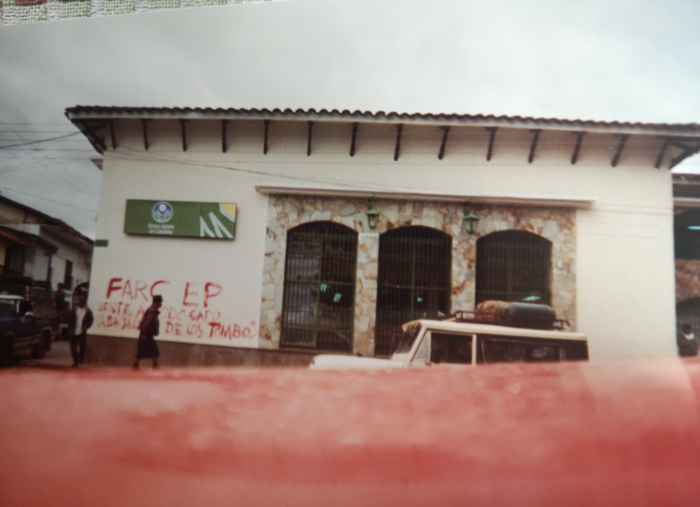
Silvia was FARC territory, the main square heavily graffitied with FRC signs and messages. It did not take long for a young woman to latch onto me. Could I help her? Her child was diabetic and she needed some money for insulin at the hospital. I was cautious.
How was I to check that she was telling the truth? I suggested we visit the hospital to find the doctor treating her child. By now we were both locked into the drama, and we went to the hospital. She found a doctor in his office and went into speak to him. He confirmed the story, but I was still suspicious that she had briefed him while I waited. I was not willing to let go and asked if I could see the child. We made an appointment for the afternoon. I walked for over half an hour along a country road aware that in the last month three German students had been kidnapped in the area. When I reached her modest home she greeted me with her smiling, warm husband and child and we chatted over a cup of tea. They were not the scheming tricksters I had imagined but a young couple trying to get by. My heart melted, now just the nervy walk back into town. The next day was enlivened by the arrival in town of Guambana people from outside. Their clothing was electric blue and pink, almost luminous. This was topped by a pork pie bowler with the crown pushed in to create a flattened top. It is usually, smaller than the head and worn at the back of the head, like a skull cap, or tipped forward at a jaunty angle. They were quiet, calm and seemingly, comfortable and communicative in their own groups, but shy of foreigners. It seemed that men were dominant, women often walking behind them and staying quiet while men chattered to each other. The women chatted separately to each other and the children. Many carried spindles and cotton in their manchillas . The spindle was spun in the right hand, the cotton controlled by the fingers of the left hand.
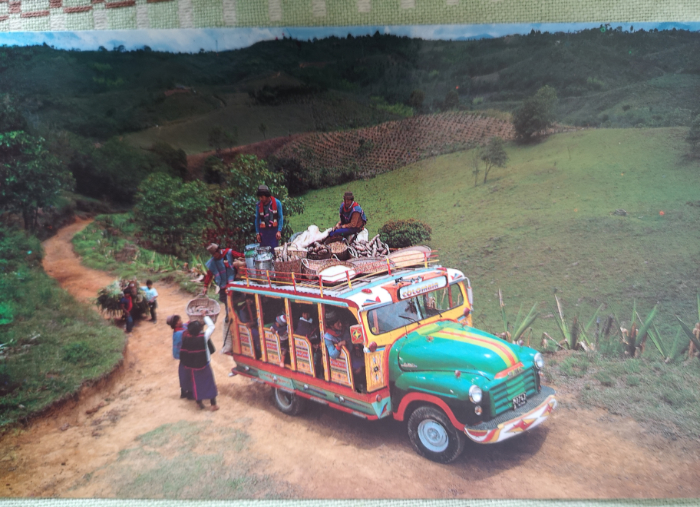
I planned to take a trip to Campesina, a Guambana village and asked my hotel lady where to catch the bus. She was not amused. It seemed that FARC were very active in the villages and the three German tourists, killed a month ago, were killed there. Whilst Silvia was relatively safe , the villages could be dangerous, so no trip. I headed for the Southern town of San Augustin, the pre-Colombian site. I managed to find a bus with no rear window and decided to sit at the back in the hope of remaining inconspicuous for the five-and-a-half-hour trip. As we got further south the roads became dusty and me and my luggage were gradually covered in a thick layer of dust. A roadblock appeared, and three young men in military fatigues, one carrying a grenade launcher, entered the bus. I tried to look nonchalant, but they only walked up the bus and satisfied themselves that there was nothing of interest. They left without a word. There were many road blocks . San Augustin was a small town which looked as though it was once a more thriving tourist destination, and I was an immediate source of fighting by local tourist agents. The rain fell hard for three hours, but that was useful for the next day jeep ride to the outlying sites of Alto de los Idolos and Alto de las Piedras. The pre-Colombian sites were impressive and featured two magnificent waterfalls. The guide was full of hair-raising stories. • Two weeks ago, a bus from Pasto was delayed by a flat tyre, arriving at just outside Popayan at dusk. EFL militia shot the tyres and took the bus money. Passengers hid in a field for three hours, Reassuringly, foreigners were not robbed. • The three German students taken hostage a week ago near Silvia had been released as one was sick. • The bus three hours before mine had been stopped by FARC guerrillas close to San Augustin. They block roads in the middle of town at night. Back in town I once again became the focus of desperate tour companies who competed and blocked each other. I decided to visit the main site alone and found a guide at the site office next day. I was at once befriended by a slight, middle-aged man, who spoke English and was only too keen to help the only tourist in town. He had helped me find a room for the night and I agreed to take him as guide to the pre-Colombian ruins. Paisa, turned out to be a cultured and knowledgeable guide to a sophisticated and surprising civilisation, even if he did rather overstep the mark by suggesting to an embarrassed young woman in the park shop that she should consider a liaison with me. On the third day we walked to the three remaining sites and the Magdelena Gorge. The attractive countryside appeared fertile, and Paisa delivered on his promise to take to meet local people. One, a campesino, on a local self-sufficient farm was the leading light in the farmers' association. He had a diverse mix of livestock and crops. The middle aged, paunchy man had poor clothes and boots with no laces, who managed to stay mildly optimistic and survived by also taking odd jobs. He detailed his challenges: • Coffee prices were so low, it was not possible to make a living. The government and rich owners control purchase to dictate prices • Six weeks ago, campesinos had blocked the road, but the army had broken up the blockades, nationally, with several fatalities. This had left the campesinos feeling powerless and struggling to survive until the economy improves . • He went on to say that the whole area was short of money and tourists no longer come because of publicity about the guerrillas . • His optimism wore even thinner as he said that he felt that civil war was inevitable, and if he could, he would leave the country, but no one has any choices. Paisa agreed. • He was trying hard to get his ten kids educated (no contraception amongst campesinos), but the common theme was lack of jobs. He had even spent two years in prison for non-payment of maintenance to the mother of two of his children outside the marriage. He was still trying to build a new house, in spite of all. On the walk back I saw that those with means had sizable farms and Paisa said that share cropping took place. The landowner would negotiate a small plot in return for half the crop. Later in the day Paisa took me to the bar/home of Frederico, who had two friends with him. He was noted for the quality of his Aguardiente, a fermented cane rum with a hint of cider taste. They managed to consume a large quantity in the afternoon that kept the conversation lively. From time-to-time other customers showed up for blood sausages and pig's intestines, washed down with rum. At one time a man with a guitar arrived with his teenage daughter. Frederico referred to him as an 'artist '. He tuned up his guitar, but his daughter determinedly turned up the radio volume and he never played. Later that evening, I saw him staggering through town, still in the care of his daughter. The town intellectuals had strong opinion. War was inevitable between left and right, north and south. If the guerrillas won real change would come, if they lost Colombia was screwed. They felt that the left knew they needed the support of intellectuals and middle classes to run services, which was not there at present. They worried about the role of the U.S. which had toppled socialist governments in Salvador and Chile. Frederico, felt that the church was crucial in any conflict and 95% of the population would run to the arms of the church in fear. However, most priests supported the right and guerrillas had not put work into winning hearts and minds. The discussion wandered into the state of the guerrillas. They agreed that original ideologies had given way to greed for money and power. There were more hair-raising stories. Paisa said that in other areas, high school had been rounded up and taken for military training, other only found employment in FARC.
In another incident, three weeks ago in Purace National Park, seven Columbians had been shot dead. A Swiss girl had earlier told me that it had been a massacre, but Paisa had another story. The tourists and mountain climbers had not sought FARC permission, who usually expected everyone to leave the mountain by 5 p.m. The guerrillas saw torches on the track and thought it was the army. Other tourist hostage stories followed. It was agreed that the guerrillas performed rough justice, shooting drug dealers and thieves who ignored warnings, but it was not always clear if guerrillas or local competition was responsible for deaths. Drugs money had been diverted into arms, whilst the old narco traders had spread more money into the economy. They said that San Augustine was full of rich Colombians. Luckily, the evening cock fight did not take place. Paisa described how it was a mass of drinking, brawling and gambling, with fighting bird fetching big prices. Paisa was now very relaxed with me and explained how his own background had been a mess of alcoholism, 'paste' (crack) and general debauchery. His wife had become a Jehovah's Witness and is divorcing him. It had been a warm and enriching three days. Backpacking Index VSO Index Main Index San Augustine-Neiva-Villa Vieja. The five-hour ride to Neiva ended with another fine mess of my own headstrong making, with lots of confused transport to the centre of a sizeable city. I planned a trip into the desert, but a bumpy trip in the back of a pickup brought the news that my guide was away in the desert. As I pondered my best move, a charming 11-year-old persuaded to stay with his dad and family, who proved very welcoming, instantly launching into a story of a visit to the U.S. and taking me for a tour of the garden. Villa Vieja was a typical desert town on a Sunday, dusty streets, little spirit, the odd U.S. car, people in bars watching T.V. and soldiers behind a wall of sandbags in front of their building - at least there was plenty of sand and time to fill the bags. I sat down for a drink and ice cream, to be joined by a man who sat beside me. It took me several moments to understand that he was Nelson Martinez, the recommended guide. He proposed we walk in the cool of the night, and we were off in 10 minutes. It was only after walking for an hour across a flat plain of cactus and scrub trees that I realised we were not coming back. We walked on for two more hours in the warm, darkening evening, a sorros crossed our path,
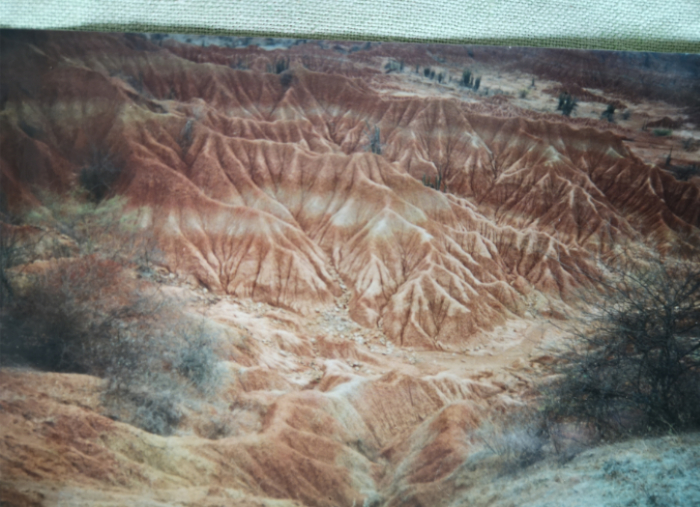
The young men were, mostly, unemployed and were under the direction of a very fit 84-year-old patriarch. We managed a lumpy conversation, Oscar, at first prickly, became excited at the Gringo presence. We toured the ubiquitous subjects of jobs, football, guerrillas and the state of Colombia. They had little understanding of the world beyond the area. We slept on a blanket on the concrete floor. We started slowly next day, with breakfast next door with Rosanne's daughter. Oscar's son left on a bike, carrying a rifle, to work. Soon the reason for the relaxed start became obvious. This area of desert, with its amazing mixture of mesa shapes and horizontal stripes of yellow, red, brown, and light clay lava layers, was, in fact quite a small area. I was being squeezed for money, but was not resentful, because the area needed it. There were no other tourists, and most of the visitors in the last two months seemed to be school children. Nelson stayed with me back in Nieva and we were joined by Oscar, with a touching farewell gift - a Colombian Police drug leaflet. I was also touched by the warmth of the farewell from my dad at the lodging, sorry to lose his new chum so soon. Let's hope that the proposed building of an observatory, cafe and hotel brings cash without destruction. Nieva-San Gil- Barrichara -Guane The six-hour trip to San Gil, which was only a stop-over. The early bus to Barrichara took me through countryside of lovely whites, blues and greens to a single-storied colonial village, paved with large brown volcanic stone blocks on the steep slope of a narrow valley. There was a sleepy feel, with not many people in town. I walked the Camino Real, a traditional Guana people trail, now block paved, which, in its unevenness, paradoxically, increased the difficulty of walking. Guana town had a ghost town feel, and people were not particularly friendly. The local bar seemed to be a gathering point for underemployed men. As I ordered some food the big lady pointed to a TV mounted on the wall and pulled a tortured expression. It seemed to be a building on fire. She communicated that it was the United States. It was the twin towers, and it was 9/11. It played all day and was the subject of all conversation. The trip was coming to an end ; just the long journey back to Bogota Back in Bogota, there was shopping to do and museums to see; then there was the marvellous salt cathedral, built by miners in the 1990s, mixing tradition cathedral and mine shaft patterns. It also contains very high quality statuary and paintings. Phew, time for home It was only when I arrived home and started to read the harrowing personal stories that I realised the full impact of the attack. It had been a journey that confirmed how lucky we were the be in a stable country with few serious worries.
|
||
Paul Hague explains. ***************************
|
||